


The Future of Wearable Technology in Everyday Life
Wearable technology has been a major factor in changing people’s interaction with digital environments and monitoring their health personally. What used to be only the functions of smartwatches. which now can monitor heart rate variability, or augmented reality glasses. That can show an image on the user’s view, these new gadgets have stopped being a status for quite. While now and have become indispensable parts of the modern world. The wearable technology market is still on its way to be a market of large and unpredictable growth. With people buying these devices finding more and more the benefits that these practical gadgets bring to their daily routines. Additionally, these gadgets are more affordable than they used to be, comfortable and packed with features thanks to technological progress. Wearables have become to offer customized insights through the use of artificial intelligence, machine learning and sophisticated sensors. That helps users in making better decisions regarding their health, fitness and productivity. We can even think about further applications of wearable technology. It will offer the possibility of completely different transformative applications, reshuffling ways of working, exercising, communicating, taking care of ourselves. The integration of wearable devices with the 5G network, battery technology and miniaturized processors is constantly opening up new possibilities. This comprehensive guide explores the wearable technology industry condition. The trends will be the future of the industry and the specific uses that are beneficial to various demographic groups. In particular, seniors and elderly people who want to live independently take care of their health in a proactive way.
Current State of Wearable Technology Market
The wearable technology market has been vibrant and grew significantly in the last 5 years. The number of devices shipped worldwide reached hundreds of millions annually. Wearable technology category wise, smartwatches are leading the market sharing with the top tech giants. Like Apple, Samsung and Garmin continuously coming up with new health monitoring features and better-performance features. Fitbit continues to enjoy the favor of health-conscious buyers in the meantime. As they seek precise data regarding their daily levels of activity, sleep habits and calorie expenditure. Besides these generalized wearables, there are now special purpose wearables such as continuous glucose monitors to check diabetic patients. Smart rings to measure biometric and AR glasses to revolutionize. All professionals operate in their careers such as in healthcare, manufacturing and engineering. The competitive environment become highly competitive with manufacturers striving to make their products stand out due to extended battery life. Precision in sensors and compatibility with smartphone environments. This has resulted in the consumers enjoying unparalleled choice and quality of products at all price points. The average wearable has now integrated several sensors. Which detect the heart rate, oxygen saturation in blood, the electrocardiogram readings. The body temperature, movement patterns among many others with the clinics-grade precision.
Also, with the support of cloud services, all these gadgets are capable of storing the data on various platforms. And the client might check his or her well-being information whenever and wherever he or she wants. The complexity of present-day wearable technology has invited healthcare professionals’ serious attention. They are increasingly recommending particular devices to patients who have chronic conditions.
Wearable Technology Trends Shaping today and Beyond
Several strong trends are currently reshaping the wearable technology landscape and will continue to influence product development for years to come. Health tracking has moved far away from the simple step counting to very complex biometric tracking, which is equally as accurate and sophisticated as clinical-grade equipment. AI can be applied to wearable devices to issue health warnings based on device analysis, alerting users to potential issues long before symptoms appear.
Non-invasive continuous monitoring has become very popular and manufacturers have developed sensors that can measure blood pressure, blood glucose levels and even hydration without the need to stick a finger or some other part of the body with a needle or any other invasive method.
Moreover, the rise of mental health monitoring is a very significant change in the way wearable technology helps to promote wellbeing in a holistic way rather than just focusing on physical metrics. The wearable tech trends are increasingly focusing on the stress detection, sleep quality analysis and mood tracking features that support users in understanding the psychological side of their health.
However, privacy has become one of the most pressing issues and manufacturers have implemented stronger encryption and given the users more control over their data.
Therefore, the openness regarding the data collection practices has already turned into a competitive edge of the companies that care about user privacy. The integration of wearable technology with smart home ecosystems represents another emerging trend, allowing devices to communicate with other connected devices to create seamless automated experiences. In the meantime, wearable devices have become more fashionable and appealing to wear thanks to fashion-oriented designs, stimulating the greater usage by wider population layers who did not consider wearable devices as stylish products before. Finally, these trends come together to suggest that upcoming wearable products will be smarter, more connected and more intent on providing custom health data than the existing generation products.
Smart Wearables and Artificial Intelligence Integration
The intersection of smart wearables and artificial intelligence represents one of the most transformative developments in consumer technology. Machine learning systems can analyze user data, detect anomalies, and provide personalized recommendations based on individual preferences and needs. These smart systems evolve as time goes on and become more accurate at anticipating health risks and recommending prevention actions. As an example, AI-enhanced wearables are capable of sensing a cardiac arrhythmia at a sensitivity of hospital-quality equipment and could perform this task prior to individuals exhibiting any symptoms of atrial fibrillation. In addition, natural language processing can allow wearing devices to interpret voice commands and offer more natural conversations than the usual button-press interfaces do. The assistant is to add that the AI integration also provides predictive analytics, which predicts the future health trends on the basis of the past data patterns and external influences, such as weather conditions, stress rates and activity variability. Moreover, the better the machine learning models are, the bigger the datasets they work with and the smarter and more precise wearable devices get with time, the longer the user wears the device. AI can provide individualized coaching by adjusting workout plans, nutrition advice, and sleep optimization based on each person’s response. As a result, users receive guidance that is personalized rather than generic. These advanced AI capabilities are now small enough to run directly on wearables, reducing the need to constantly send sensitive health data to cloud servers.
Wearable Technology for Seniors: Transforming Aging in Place
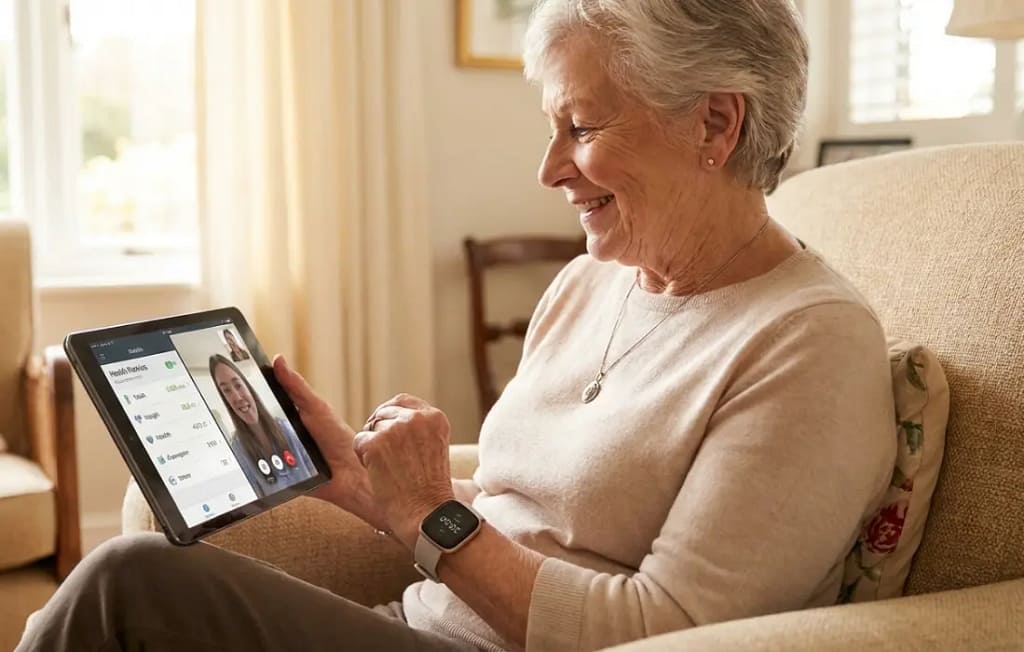
Seniors’ wearable technology has turned out to be an essential instrument in keeping their freedom, giving the possibility of early discovery of health issues and supplying a feeling of security not only to the aged people themselves but also to their family members. Among the many good uses of it, fall detection stands out as one of the most effective and wearables are the devices that automatically inform emergency contacts when a fall occurs that may result in a serious injury of elderly people. Furthermore, uninterrupted attention to vital signs will allow doctors to keep an eye on chronic diseases from a distance and get involved without delay if the situation changes drastically.
The senior wearable technology industry is tackling the biggest health issues that come with age such as correct medication intake, memory worsening and loneliness by providing the features that are designed especially for this group of people. For instance, the implementation of medication reminders built in wearable gadgets will facilitate seniors in recalling the correct time of taking the medication and hence lead to better treatment outcomes. Besides that, GPS tracking features provide safety for elderly persons with mild cognitive impairment who may lose track of their location and at the same time relatives will be able to find them.
The modern wearable products’ user-friendly features give seniors with low dexterity and vision the possibility to use the products with much less difficulty than the usage of smartphones or computers. Furthermore, voice-activated controls do away with the need for very precise finger movements on small screens, thus enabling wearable technology to be more feasible for elderly users. Consequently, the aged will be allowed to get access to their health information, be in touch with the people they love and receive help in an emergency without any complication of difficult technologies.
Wearable Devices Future: Emerging Technologies on the Horizon
The wearable devices future promises revolutionary capabilities that will expand far beyond current generation products in sophistication and application scope. Stretchable materials and flexible electronics will allow wearables to be skin friendly, giving them a comfort and durability that cannot be achieved with rigid electronics. Additionally, the development of battery technology such as solid-state batteries and the use of body heat as energy will help to eliminate the necessity of charging devices very often, possibly allowing the production of devices that can work during weeks or months without the need to replace the battery. The introduction of augmented reality will change the interaction of users with information, displaying digital content in front of their visual field and giving hands-free access to a navigation system, communication and health information. In the meantime, brain-computer interfaces are the new frontier that might allow communicating directly with the brain and wearable devices, allowing the development of enhanced cognitive capabilities and new human-computer interactions. Moreover, biocompatible sensors placed under the skin will be able to measure the inner physiological parameters with an accuracy never been possible before and even be fully undetectable to the viewer. The wearable versus implantable technology will thus become unclearer as the gadgets will be more attached to the human body itself. The wearable devices future will also see expansion into new application areas including environmental monitoring that tracks air quality and pollution exposure, workplace safety systems that prevent injuries in hazardous industries and performance enhancement tools for professional athletes. Furthermore, wearables will be able to deliver customized health advice effectively due to their integration with the genomic data that will help deliver the information concerning the genetic predispositions and the metabolic traits of the individual. Nevertheless, the ethical issues regarding the privacy of data, genetic information protection and equal access will be more significant as these technologies evolve. Therefore, policymakers and manufacturers must work together to establish frameworks that maximize benefits while protecting individual rights and ensuring that wearable technology benefits all demographic groups rather than only wealthy early adopters.
Health Tracking Functionality: Simple Measures to Clinical Quality
Contemporary wearables have gone through the evolution from the mere step counters to the advanced health monitoring systems that help users to get the health insights that were only available via clinical testing before. One of these insights is heart rate variability that enables the user to gauge the level of his/her stress and the functioning of the autonomic nervous system with the help of a device at home, data that has a very high correlation with the general health condition and state of recovery. Also, the blood oxygen saturation displays will assist users in recognizing possible respiratory complications or sleep apnea, which usually remain overlooked, until they develop severe complications. The electrocardiogram feature built into the high-end smartwatches is able to monitor irregular heartbeats and notify the users to seek medical treatment, which could possibly avert strokes and other severe heart cases. Moreover, the wearable and continuous glucose monitors have transformed the management of diabetes since it gives real time information about the impact of diet and exercise on the blood sugar levels. As a result, diabetic users are able to make real time corrections to avoid the risky levels of blood sugar. Sleep monitoring has also turned into a more advanced method where wearable technology is currently able to monitor sleep phases and sleep disorders as well as give recommendations on how sleep quality can be enhanced in an individualized manner. In the meantime, body temperature is becoming clinically relevant after the COVID-19 pandemic as wearables can assist users in detecting fever as a possible indicator of infection. In addition, another valuable sign that can be monitored in wearable devices and which helps to notify about respiratory infection or other pulmonary problems is respiratory rate. The combination of various sensors provides a holistic picture of their health image enabling people to comprehend the effect of various factors on their wellbeing. Yet, the users have to be aware of the fact that wearable devices are not a substitution for clinical medical testing and professional guidance of the healthcare provider but only a supplementation. As a result, the best strategy is to integrate the outcomes of wearable technology with regular medical check-ups and having an open dialog with the healthcare providers about the health trends which cause worry.
Integration with Healthcare Systems and Medical Professionals
Wearable technology is progressively being acknowledged by medical practitioners. As an efficient instrument for remote patient monitoring, management of chronic diseases and implementation of preventive care initiatives. By harmonizing wearable devices with electronic health record systems, doctors can have access to patient data on a real-time basis. Which can be very instrumental during clinical decision making. If quick action is needed to be taken in an event of detecting a sudden trend. It will be made without delay. To add on that, remote monitoring schemes that use wearable technology. Their main source have brought about a lot of advantages for patients with heart failure, atrial fibrillation. And also other chronic diseases that require close monitoring. In case of low compliance with medication, the healthcare facility will get assistance from wearable devices to identify those patients. Then provide the necessary support or education. Besides that, adoption of wearable technology in clinical trials helps researchers to get accurate, frequent data from the study participants. Thus enhancing the quality of the research and reducing the number of face-to-face visits. This led increased speed in medical research because wearable devices have never offered much data collection as they do now. However, the rules and regulations that govern the industry have not evolved in tandem with the technological innovation. As a result, there is a lot of ambiguity regarding which kinds of wearable devices should be classified. Medical devices and hence require approval by the FDA. As a consequence, medical professionals are obliged to conduct a thorough assessment of wearable technology devices to make certain that such devices are of a high enough clinical standard before they advise their use to patients. Besides, insurance firms have started to investigate wearable gadget and remote monitoring services coverage, as it is realized that prevention-based health monitoring lessens costly emergency care and hospitalization. However, the rules and regulations that govern the industry have not evolved in tandem with the technological innovation and as a result, there is a lot of ambiguity regarding which kinds of wearable devices should be classified as medical devices and hence require approval by the FDA.
Ethical, Privacy and Security
As wearable technology gets more complex and gathers. Intimate health data, issues of privacy and security have become major concerns for both users and policymakers. The wearable devices share private health data like pulse, location, sleep patterns. And increasingly genetic data to cloud servers controlled by tech companies. Moreover, service conditions of this data usually provide companies with wide range of rights act with this information. Share it with third parties to conduct research, market, or otherwise. The users therefore need to read the privacy policies carefully and know. What their wearable devices track and how the companies use the data they receive. Cybersecurity researchers have also focused on the security of wearable devices. And found it vulnerable to unauthorized access to personal health data. Moreover, the increasing numbers of wearable devices pose a bigger threat to hackers. Who would like to steal personal information or impair other important health monitoring capabilities. Nevertheless, well-established manufacturers have introduced encryption, safe authentication and regular security patches in order to maintain the privacy of user. In addition, laws such as GDPR in Europe and new privacy laws in other states of the US. Started setting standards of data protection and consent of the user. At the same time, the problem of morally questionable use of algorithms in health monitoring systems has come up. These systems may be less accurate for some demographic groups and, therefore, can lead to health disparities. Hence, designers have to make inclusive designs and perform rigorous tests on diverse populations. So, that wearable technology can be an equitable way of all users. Innovation versus protection call for continuous talks between technology companies, healthcare providers, regulators. Users in order to find out the right level of protection without losing the advantages that wearable technology brings.
Adoption Trends and Demographics in Consumers
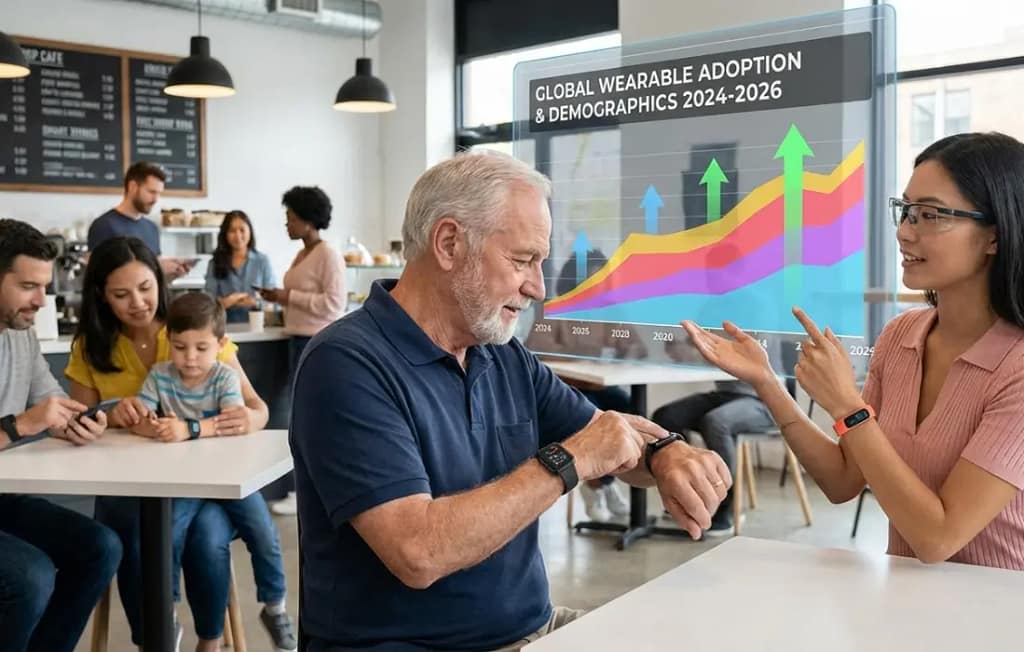
Wearable technology usage evolved differentively for various demographic groups. The younger consumers and affluent early adopters were the ones who led the initial market penetration. The highest adoption rates are shown by millennials and generation z consumers. Who consider wearables as the extensions of their smartphone lives and active fitness lifestyle. In addition, wealthy individuals with disposable income have stimulated the sales of wearable devices of high quality. Which has formed a market segment. That is ready to spend huge sums on buying high-quality gadgets with outstanding functionalities and brand reputation. Nevertheless, uptake in lower income groups has been much slower because of the cost factor, low awareness of practical benefits. Meanwhile, adoption among seniors and elderly populations has been slower than among younger demographics. Despite the substantial health benefits these groups could derive from wearable technology. As a result, manufacturers have started creating products that tailored to elderly, have user-friendly interfaces and a senior-friendly feature list. Moreover, gender variations in the adoption trends have appeared with men traditionally outpacing. Women in the adoption of fitness oriented wearables. Women leading in the adoption of health oriented devices and features such as menstrual cycle tracking, pregnancy monitoring among others. Besides, geographic disparities in adoption can be attributed to variations in technology infrastructure. Healthcare system integration and consumer sensitivity in the regions. The COVID-19 pandemic caused the adoption rate to increase across all demographic categories. As people were eager to find a way to monitor their health at home and reduce physical medical visits. Thus, the wearable technology market has turned to more diverse with products that meet the needs of different demographic segments. Rather than take the one-size-fits-all approach. As the cost keeps going down and awareness keeps going up. Wearable technology adoption will probably be more like a common thing across different demographic groups. Thus, eventually, its penetration will be at the same level as that of smartphones.
Applications and Productivity in the workplace
Wearable devices have extended their reach from personal health and fitness to the work environment. Where they lead to higher productivity, better safety and provide insightful business intelligence. For example, smart helmets offer workers an augmented reality interface and if the task is complex. They get the instruction live, thus abolishing errors and decreasing the time of new employee training. Moreover, wearable sensors can be used to measure the level of fatigue in workers and notify supervisors. Whenever workers are too tired to perform their duties safely to avoid accidents in a hazardous workplace. Besides this, location tracking wearables also can serve to coordinate large workforces distributed. Over large facilities and respond to emergencies quickly. As a result, firms have reported great safety, productivity performance after their wearable technology programs have been put into effect. On the contrary, the fear of being monitored and the lack of privacy among staff has been identified. As a major obstacle to the use of wearables in the workplace. Therefore, organizations have to establish a framework of data policies for the collection, use and retention. That would not only enable them to win employees’ trust but also comply with labor law requirements. Additionally, ergonomic bracelets that record posture and the movement trends are useful in avoiding repetitive strain injuries. That plague office employees and factory workers. Stress monitoring wearable on the other hand gives employers information regarding the conditions in the workplace. That influence the wellbeing of employees to undertake specific actions aimed at improving the work environment.
The use of wearable technology in occupational safety programs has led to the measurable reduction of injury rates. Besides, wearable tech is a potential productivity monitoring instrument. Which in turn offers managers impersonal data revealing the manner in which employees distribute their work hours and concentration. Therefore, firms embracing the use of wearable devices in the office. And handling the ensuing privacy and morale issues in a professional manner are able to gain immense advantages.
Summary: The Transformative Potential of Wearable Technology
Wearable tech has gone from being a small category of consumer gadgets to a major change agent. That is totally changing the way people keep track of their health, work, exercise and interact with their surroundings. Rising sensor technology, artificial intelligence, longer battery life, and lower prices are driving these advancements. Which are all responsible for conditions of wearable usages that have gone like a rocket in all age groups. Besides, the health benefit of continuous monitoring, personalized health data attracted the serious attention of healthcare providers and insurance organizations. That are eager to both improve the results and reduce the expenses. Currently, the new frontiers in augmented reality, workplace safety and cognitive enhancements reveal even more revolutionary potential shortly. Therefore, those who recognize and technologically embrace wearable devices will substantially be able to control their health. Stay updated with important information and improve your efficiency. Still, to unlock the entire promise of wearable tech. It is necessary to take care of issues such as privacy, security and fair access. So that these powerful tools do not discriminate against certain groups. Hence, stakeholders in technology, healthcare, policy and business should work together to put in place measures. That facilitate the attainment of goals, at the same time, protect individual freedoms and involve the principle of responsible innovation. The coming era of wearables depicts a scenario whereby constant health monitoring would be as easy as checking one’s email. Personal health data guide for everyday decisions and tech would blend naturally with human biology to improve capacity and wellness.
Frequently Asked Questions About Wearable Technology
What is the most important feature to consider when buying a wearable device?
The best feature depends on your needs. Health users should prioritize accurate heart rate and blood oxygen tracking. Fitness users need detailed workout data and seniors may value fall detection and emergency alerts. Also ensure smartphone compatibility and regular software updates.
How accurate are wearable devices compared to medical equipment?
High-end wearables are fairly accurate for metrics like heart rate and oxygen levels but best for tracking trends, not diagnosis. For medical decisions, clinical-grade testing is still recommended.
How long does a wearable device battery last?
Battery life varies by device. Smartwatches usually last 1–3 days, fitness trackers 5–10 days and specialized devices like glucose monitors up to 14 days.
Is it safe to wear a wearable device all day?
Yes, most wearables are safe for continuous use. To avoid skin irritation, keep the device clean, ensure a proper fit and take breaks if needed.
What privacy features should I look for in a wearable?
Choose devices with strong data encryption, clear privacy policies, two-factor authentication and user control over data sharing. Avoid brands with poor security records.

OfferCade is powered by a team of tech-savvy professionals led by Alex Carter, an experienced Digital Marketer and SEO Expert. With a deep understanding of online trends and content optimization, the team focuses on simplifying complex technology and making it accessible for everyone. By breaking down innovations and delivering clear, insightful content, OfferCade bridges the gap between the vast world of technology and its users.


